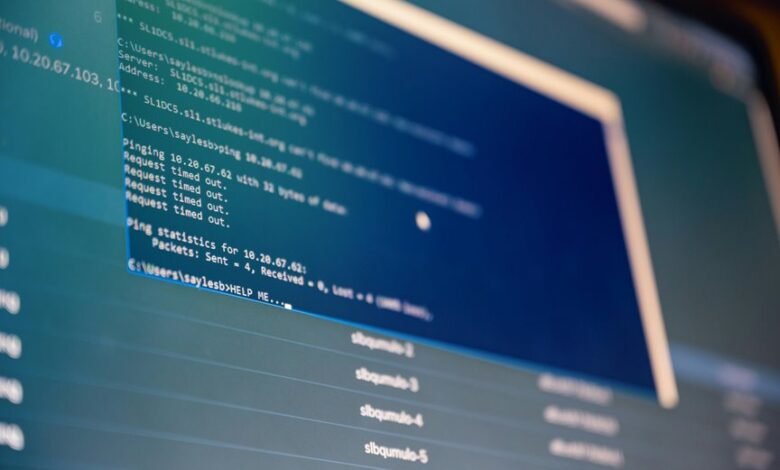
The address “10.70.122.5589” warrants scrutiny due to its unconventional structure. It exceeds the standard IPv4 format, which is limited to four octets, each ranging from 0 to 255. This discrepancy raises questions about potential misconfigurations or allocation errors within the network. Understanding the implications of such anomalies is essential for effective network management and security. A closer examination may reveal critical insights into the integrity of network communication.
Understanding the Structure of System Addresses
While various systems utilize distinct address formats, the fundamental structure of system addresses generally comprises a combination of numerical identifiers and specific encoding schemes.
This structure often reflects a hierarchical organization that facilitates efficient data retrieval and management.
The Role of System Addresses in Network Communication
System addresses play a critical role in facilitating network communication by providing unique identifiers for devices and services within a network.
They enable effective address resolution, ensuring that data packets reach their intended destinations.
Communication protocols rely on these addresses to establish and maintain connections, allowing for seamless information exchange.
The precision of system addresses contributes significantly to the efficiency and reliability of network interactions.
Implications for Network Management and Security
Effective management of system addresses is vital for ensuring robust network security and operational efficiency.
Proper address allocation enhances resource utilization while minimizing vulnerabilities. Implementing stringent security protocols can safeguard against unauthorized access and data breaches.
Conclusion
In the labyrinth of network communication, addresses like “10.70.122.5589” serve as both signposts and pitfalls. Their deviation from the established IPv4 format symbolizes a potential misstep in the intricate dance of data transmission. Such anomalies demand vigilant scrutiny, for they can unravel the very fabric of connectivity, exposing networks to vulnerabilities. Ultimately, ensuring the integrity of system addresses is akin to fortifying the walls of a digital fortress, safeguarding against the chaos of misconfiguration and error.